
Landscape Design with Pools: Do You Actually Need One?
For many Australian homeowners, adding a pool feels like a natural next step. It often starts as a mood rather than a decision — long summers, kids playing, friends around the table, the sense that a backyard isn’t quite finished without water in it.
But the choice to build a pool is rarely a fully informed one at the outset. Costs, ongoing maintenance, loss of flexible space, and long-term value are usually considered later, if at all. Good landscape design with pools doesn’t begin by asking where the pool should go. It begins by asking whether a pool is the right move in the first place.
This isn’t an argument against pools. It’s about slowing the decision down and understanding what you gain — and what you give up — before committing a large portion of your garden to a single use.

Natural swimming pool with aquatic plants and reeds in a suburban Australian backyard beside an open lawn
Pools Are Single-Use Objects With a High Cost
A pool is one of the most dominant elements you can introduce into a garden. Whether large or small, it immediately fixes how space is used and limits what remains possible elsewhere. The thing most people underestimate losing is flexibility.
Open lawn isn’t wasted space. In Australian backyards it’s often the buffer that absorbs change — kids growing up, different ways of hosting, shifting priorities over time. When a large pool goes in, multiple potential uses are traded for a single activity. The assumption that a pool will automatically lead to more time spent in the garden is often untrue. Many pools are heavily used for a short period, then only occasionally, while the loss of flexibility is permanent.
This trade-off becomes sharper once cost is understood. A custom large pool commonly lands around $100,000, depending on complexity, access, excavation, finishes, and compliance. That figure doesn’t include ongoing costs — heating, chemicals, maintenance, insurance, fencing compliance — or the space the pool permanently consumes. Pools also rarely deliver strong return on investment. At best they’re neutral; for some buyers they’re a negative.
None of this makes pools a bad decision. But it does mean they deserve serious scrutiny.
Many People Want Water, Not a Pool
A useful question is whether you actually want a pool, or whether you want the presence of water in your garden.
On smaller and smaller Australian lots, large pools often overwhelm space. This is why alternatives have grown in popularity. Plunge pools are exploding because they offer immersion and cooling without consuming the entire backyard. Outdoor showers and outdoor baths are increasingly valued as everyday rituals rather than occasional events.
There are also non-swimming options that still deliver atmosphere and relief. Fish and frog ponds, natural pools, and water features set within planting can cool a garden, create sound and movement, and even provide habitat value. These approaches integrate water as part of the landscape rather than allowing it to dominate it.
And sometimes the best option is no water at all. Shaded courtyards, deep planting, and well-designed outdoor rooms often lead to more consistent use than a pool ever will.
What the Same Budget Can Achieve Instead
On a typical 400–500 sqm suburban block, the budget required for a large pool can transform the entire garden.
Instead of one dominant object, that investment can fund better soil and planting, stronger connection between house and garden, shaded outdoor spaces, flexible lawn areas, and still allow water to be included in a more modest and appropriate way. Smaller pools, plunge pools, or integrated water features can coexist with meaningful open space rather than replacing it.
This approach spreads value across the garden instead of concentrating it in a single feature. The result is a backyard that works year-round and adapts as family life changes.
If You Do Build a Pool, Proportion Matters
When a pool is the right decision, proportion becomes the most important design consideration.
A useful guiding rule is that the water body should not take up more than one quarter of the total open space of the garden. This isn’t a hard rule, but it’s a strong benchmark. A garden that is half pool and half everything else is, in most cases, a failure. It leaves no room for flexibility, planting depth, or future change.
Successful backyards with pools treat the pool as one element within a larger system. Open space is retained. Circulation remains clear. Planting is generous and integrated early, not added later. The garden still works when the pool isn’t in use — including winter.
Structure the Garden First, Then Decide
The most reliable way to avoid regret is to structure the garden before committing to a pool. That means understanding how the garden should function now and over time, where flexibility needs to be protected, and how future changes might unfold.
This is where early-stage planning has the greatest impact. Testing ideas on paper — through sketches, plans, or simple models — allows bad options to fail cheaply and good options to be refined before construction begins. It also brings approvals, cost, and sequencing into the conversation early, rather than discovering constraints once money has already been spent.
A Gramina Garden Plan is designed for exactly this moment. It helps clarify whether a pool genuinely fits your site, your life, and your budget — or whether water can be introduced in a more sensitive and effective way.
The goal isn’t to say no to pools. It’s to make sure that when you say yes, the rest of the garden doesn’t quietly pay the price.
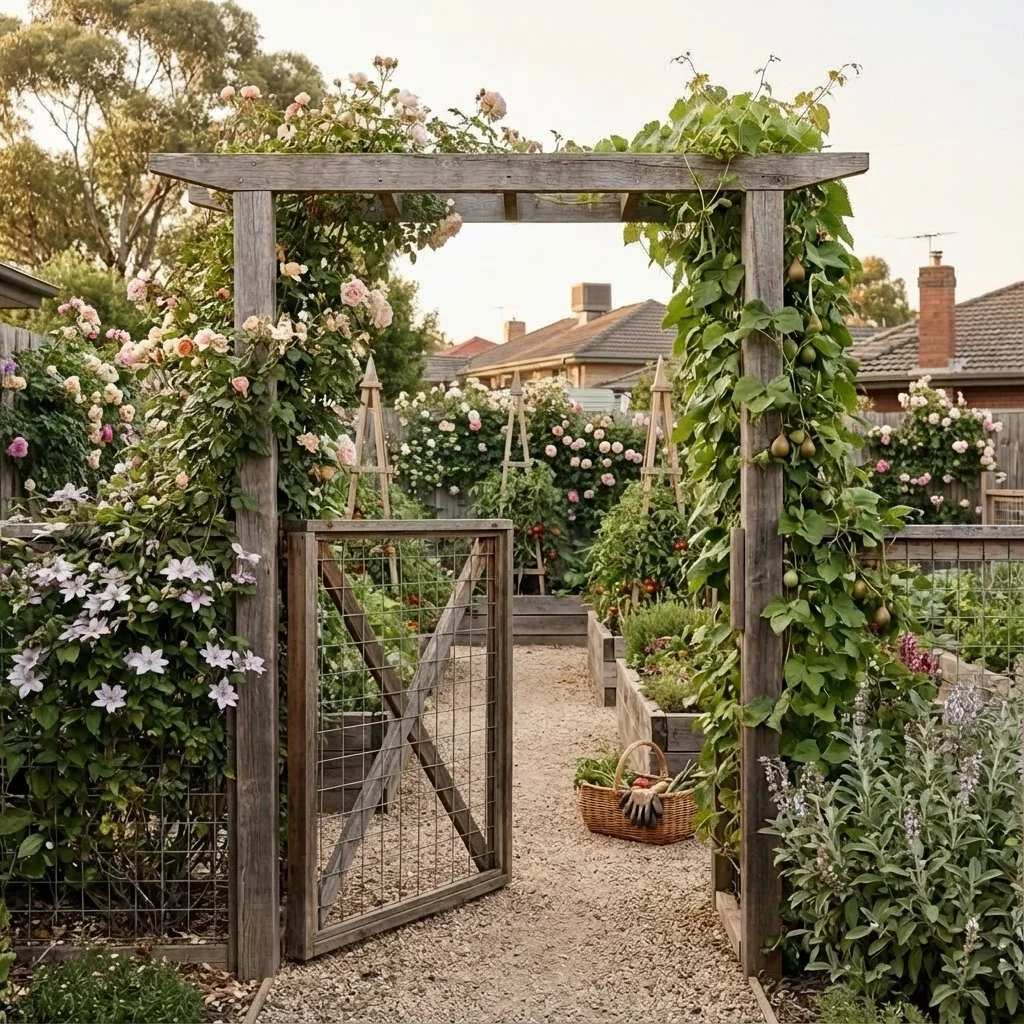
A garden shaped by seasons, habits, and the quiet satisfaction of growing food.
Productive Patch is about settling into a slower, more attentive rhythm — noticing the seasons change, harvesting what’s ready, and building small rituals around growing and eating. It’s the pleasure of stepping outside to check what’s thriving, picking herbs moments before cooking, and gradually becoming someone who lives with the garden rather than managing it. Beneath that feeling sits a clear, considered layout that shows how to arrange a veggie garden for success, working with sun, shade, edges, and access. Beds are positioned to support seasonal crops, perennials, and longer-term producers together, creating strong practical foundations. The result is a garden that feels generous and achievable, where productivity supports everyday life rather than competing with it.ple, resilient layout and styling creates a tidy, appealing outdoor space that suits both long-term rentals and low-impact improvements.
What’s included in your Veggie Garden Plan
Bespoke Concept Layout — A garden layout for your site designed to optimise sunlight, access, and bed arrangement for productive food growing.
Planting Palette — A curated mix of seasonal crops, perennial edibles, and longer-term productive plants suited to your climate and growing conditions.
Materials, Finishes & Lighting — Practical, durable recommendations for beds, paths, edges, and working surfaces that support everyday use and seasonal change.
Build Notes — guidance to help you understand installation steps, sequencing, and key considerations when bringing the plan to life.
Additional Moments (Optional) — any add-ons you choose will be integrated seamlessly into your bespoke concept plan.
After purchasing this Gramina Garden Plan, you’ll complete a short form with your site details. We’ll review everything to confirm the plan is a good fit for your property and climate. If anything doesn’t align, we’ll reach out to discuss options and ensure you get the right outcome for your garden.
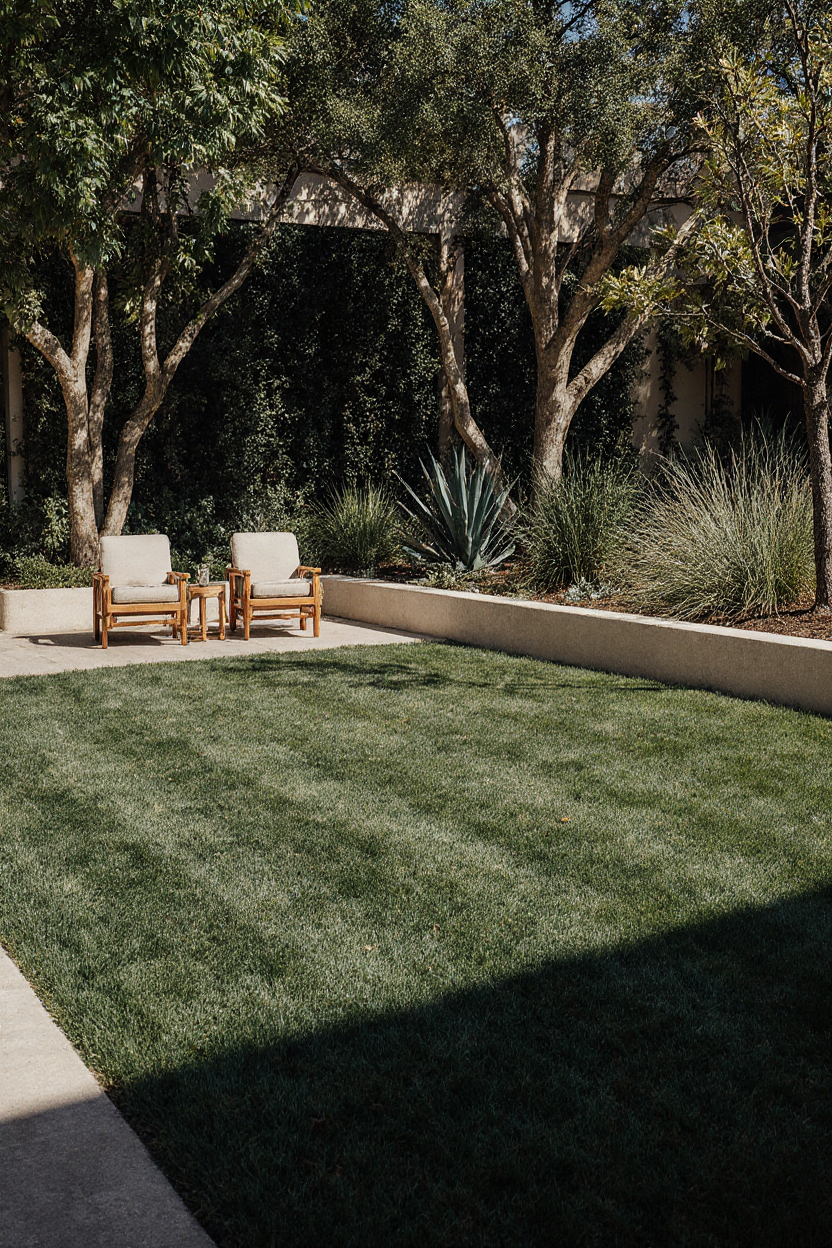
A low-maintenance garden plan designed for simple living. Durable, adaptable, and easy to care for.
A low-maintenance garden plan focuses on straightforward layouts and reliable planting that look good with minimal effort. Hardy natives and exotics, compact shrubs, and tough ground covers are selected for durability, low water use, and minimal pruning. Simple materials and clear structure keep the garden tidy and resilient over time, making it a practical choice for busy households, property owners, or anyone wanting an outdoor space that quietly works in the background.
What’s included in your Low Maintenance Plan
Bespoke Concept Layout — a clear, simple design structured for low maintenance and durability.
Planting Palette — a selection of hardy, drought-tolerant plants curated to suit your climate and the Low Maintenance theme.
Materials, Finishes & Lighting — recommended surfaces, fixtures, and lighting choices that support simple, long-lasting outdoor spaces.
Build Notes — guidance to help you understand installation steps, sequencing, and key considerations when bringing the plan to life.
Additional Moments (Optional) — any add-ons you choose will be integrated seamlessly into your bespoke concept plan.
After purchasing this Gramina Garden Plan, you’ll complete a short form with your site details. We’ll review everything to confirm the plan is a good fit for your property and climate. If anything doesn’t align, we’ll reach out to discuss options and ensure you get the right outcome for your garden.
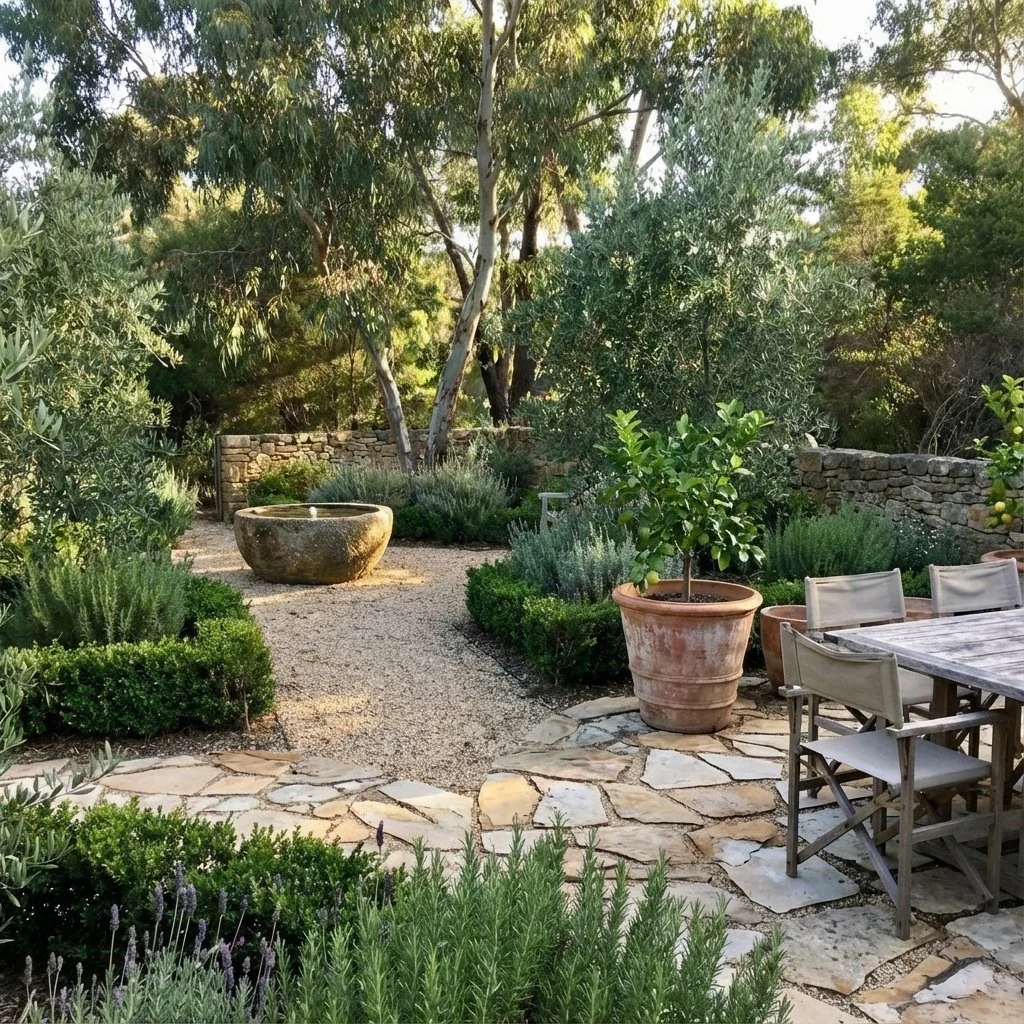
A relaxed, shaded garden inspired by Mediterranean living, shaped for Australian conditions.
A Mediterranean garden plan in an Australian context is about atmosphere, rhythm, and ease. It supports long afternoons outdoors, shared meals, and the simple pleasure of lingering outside. The design balances sun and relief, openness and enclosure, creating a garden that feels comfortable and usable across the seasons. Natural, honest materials give the space weight and timelessness, while resilient planting ensures the garden remains beautiful through heat and dry periods. The result is a warm, social setting grounded in everyday outdoor living.
What’s included in your Mediterranean Garden Plan
Bespoke Concept Layout — a clear, site-specific layout shaping relaxed outdoor spaces for everyday use.
Planting Palette — hardy, climate-suited plants selected for longevity, texture, and Mediterranean character.
Materials, Finishes & Lighting — natural surfaces and warm lighting that age well and feel timeless.
Build Notes — guidance to help you understand installation steps, sequencing, and key considerations when bringing the plan to life.
Additional Moments (Optional) — any add-ons you choose will be integrated seamlessly into your bespoke concept plan.
After purchasing this Gramina Garden Plan, you’ll complete a short form with your site details. We’ll review everything to confirm the plan is a good fit for your property and climate. If anything doesn’t align, we’ll reach out to discuss options and ensure you get the right outcome for your garden.