
Landscape Design for Front Yards: Thinking Strategically, Not Decoratively
In Australia, the front garden isn’t treated as a precious display space. Unlike some overseas contexts where front yards are expected to signal order or status, Australian front gardens tend to be pragmatic. They’re used for parking, access, storage, services, or as a secondary garden that supports everyday life. Because of this, they’re often shaped by necessity rather than intention.
That’s why good landscape design for front yards isn’t primarily about decoration. It’s about resolving real spatial and functional conditions in a calm, considered way. When done well, a front garden doesn’t just improve the entry to a house — it quietly unlocks potential elsewhere on the property, particularly in the backyard where space is usually more valuable and intensely used.

A calm and simple front garden providing access, planting and shade.
The Front Garden Is Often Doing Too Much Without Being Designed To
Many front gardens aren’t actively designed at all. They evolve incrementally. A car ends up parked where it fits. A path forms where people naturally walk. A tree dominates the space because it was already there. Paving is added reactively to solve access problems, and planting is introduced without the conditions needed for it to succeed.
When people search for front yard landscape design, it’s usually because something structural isn’t working. Parking feels awkward, access to the front door is unclear, paving is poorly scaled, or plants never seem to thrive. These issues aren’t aesthetic failures — they’re signs that the underlying layout hasn’t been resolved.
The common thread is that the front garden has been treated as leftover space rather than as part of the whole property. Without considering how it connects to daily routines, services, and the rest of the site, problems tend to compound rather than resolve.
A Front Garden Sets the Tone, Not the Performance
A well-designed front garden doesn’t need to be expressive or showy. In many cases, its success lies in what it doesn’t do. Restraint allows the house, the street, and the broader landscape to sit comfortably together without visual noise or unnecessary complexity.
One useful way to think about this is the Australian mullet approach to garden design: business at the front, party at the back. The front garden establishes calm, order, and clarity. It hints at care and intention without demanding attention. This, in turn, gives you permission to be more generous, playful, or ambitious in the backyard where privacy and space allow it.
The aim isn’t to under-design the front garden. It’s to design it with discipline so it frames the rest of the property rather than competing with it.
Front Gardens Work Best When They Carry Load
One of the most overlooked opportunities in front garden landscape design is using the space to quietly handle functions that would otherwise consume valuable backyard area. When designed early and thoughtfully, front gardens can absorb practical requirements without feeling cluttered or utilitarian.
Elements such as rainwater tanks, discreet storage, bins, services, parking, and clear entry paths can often sit more comfortably in the front of a property. When integrated into a coherent layout, these features tend to disappear into the background, allowing the garden to remain calm and legible.
By allowing the front garden to carry this functional load, pressure is relieved elsewhere on the site. The backyard can remain more open, flexible, and expressive, rather than being fragmented by infrastructure that had nowhere else to go.
Why Overdesigning the Front Often Backfires
A common mistake in front garden design is trying to do too much in a space that doesn’t benefit from it. Overplanting, overly complex layouts, or highly decorative gestures can quickly work against the very outcomes people are hoping to achieve.
In practical terms, this often leads to increased maintenance, compromised access, or a front garden that competes unnecessarily with the architecture. In many Australian homes, the majority of usable land sits at the back of the property. Overinvesting design ambition at the front can inadvertently limit what’s possible where people actually spend their time.
Good landscape design isn’t about treating every part of a site equally. It’s about understanding where restraint creates freedom elsewhere.
Think of the Front Garden as Part of a System
The most important shift in thinking is to stop seeing the front garden in isolation. Even small front gardens influence how the entire property functions day to day. They affect how people arrive, how services are handled, how parking works, and how much flexibility exists in the backyard.
When the front garden is unresolved, pressure accumulates across the site. When it’s calmly organised, the rest of the garden feels easier to plan and inhabit. This applies whether you’re undertaking a modest front garden upgrade or a broader landscape design that includes both front and back gardens.
Thinking of the front garden as part of a system — rather than a standalone project — leads to better decisions and fewer compromises over time.
Where Gramina Fits In
This is exactly the point where early-stage garden design guidance has the most impact. A Gramina Garden Plan helps you step back and view the front garden as part of the whole property, resolving layout, access, and priorities before planting or construction decisions are locked in.
Rather than overdesigning the wrong space, it allows you to clarify what the front garden needs to do, what belongs there, and what should be protected elsewhere on the site. For some people, this clarity is enough to move forward confidently on their own. For others, it becomes a strong foundation before engaging more detailed landscape design services.
Either way, it prevents the front garden from becoming an afterthought — or a constraint.
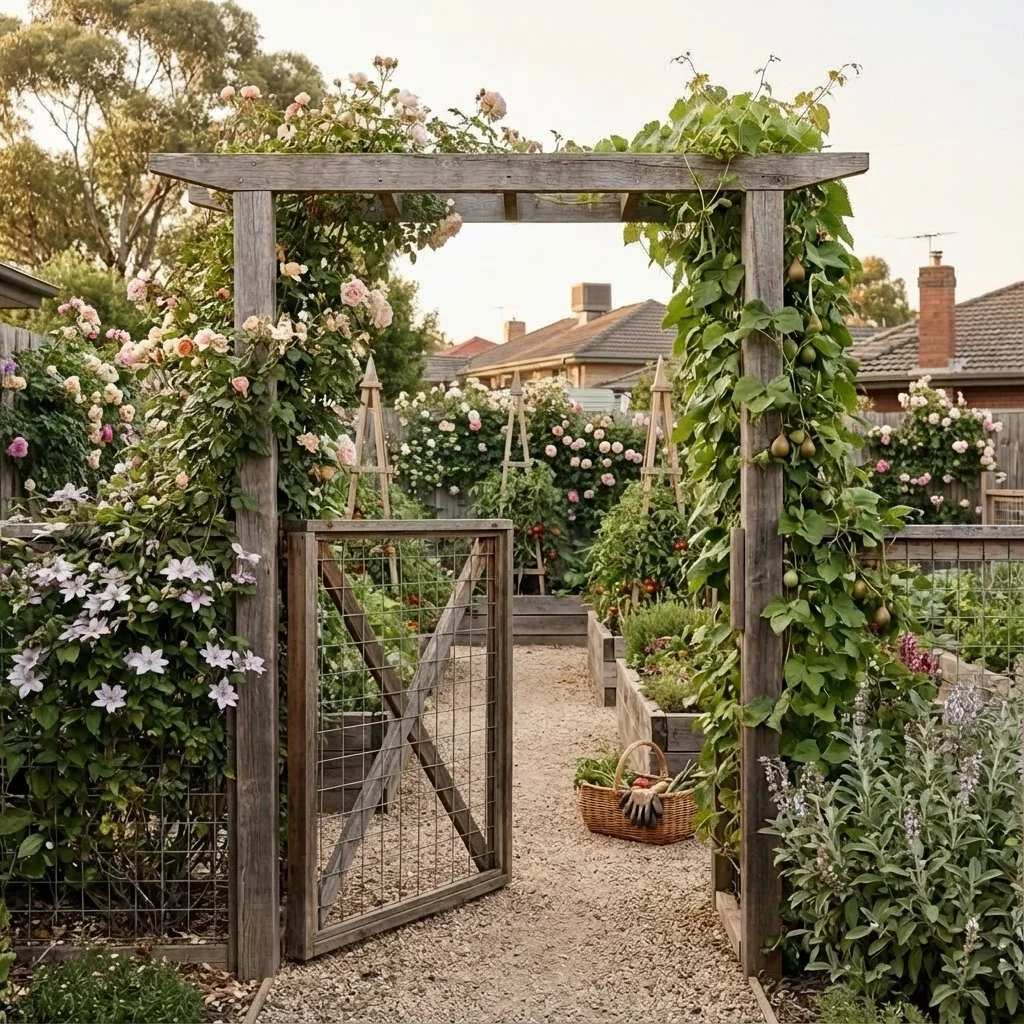
A garden shaped by seasons, habits, and the quiet satisfaction of growing food.
Productive Patch is about settling into a slower, more attentive rhythm — noticing the seasons change, harvesting what’s ready, and building small rituals around growing and eating. It’s the pleasure of stepping outside to check what’s thriving, picking herbs moments before cooking, and gradually becoming someone who lives with the garden rather than managing it. Beneath that feeling sits a clear, considered layout that shows how to arrange a veggie garden for success, working with sun, shade, edges, and access. Beds are positioned to support seasonal crops, perennials, and longer-term producers together, creating strong practical foundations. The result is a garden that feels generous and achievable, where productivity supports everyday life rather than competing with it.ple, resilient layout and styling creates a tidy, appealing outdoor space that suits both long-term rentals and low-impact improvements.
What’s included in your Veggie Garden Plan
Bespoke Concept Layout — A garden layout for your site designed to optimise sunlight, access, and bed arrangement for productive food growing.
Planting Palette — A curated mix of seasonal crops, perennial edibles, and longer-term productive plants suited to your climate and growing conditions.
Materials, Finishes & Lighting — Practical, durable recommendations for beds, paths, edges, and working surfaces that support everyday use and seasonal change.
Build Notes — guidance to help you understand installation steps, sequencing, and key considerations when bringing the plan to life.
Additional Moments (Optional) — any add-ons you choose will be integrated seamlessly into your bespoke concept plan.
After purchasing this Gramina Garden Plan, you’ll complete a short form with your site details. We’ll review everything to confirm the plan is a good fit for your property and climate. If anything doesn’t align, we’ll reach out to discuss options and ensure you get the right outcome for your garden.
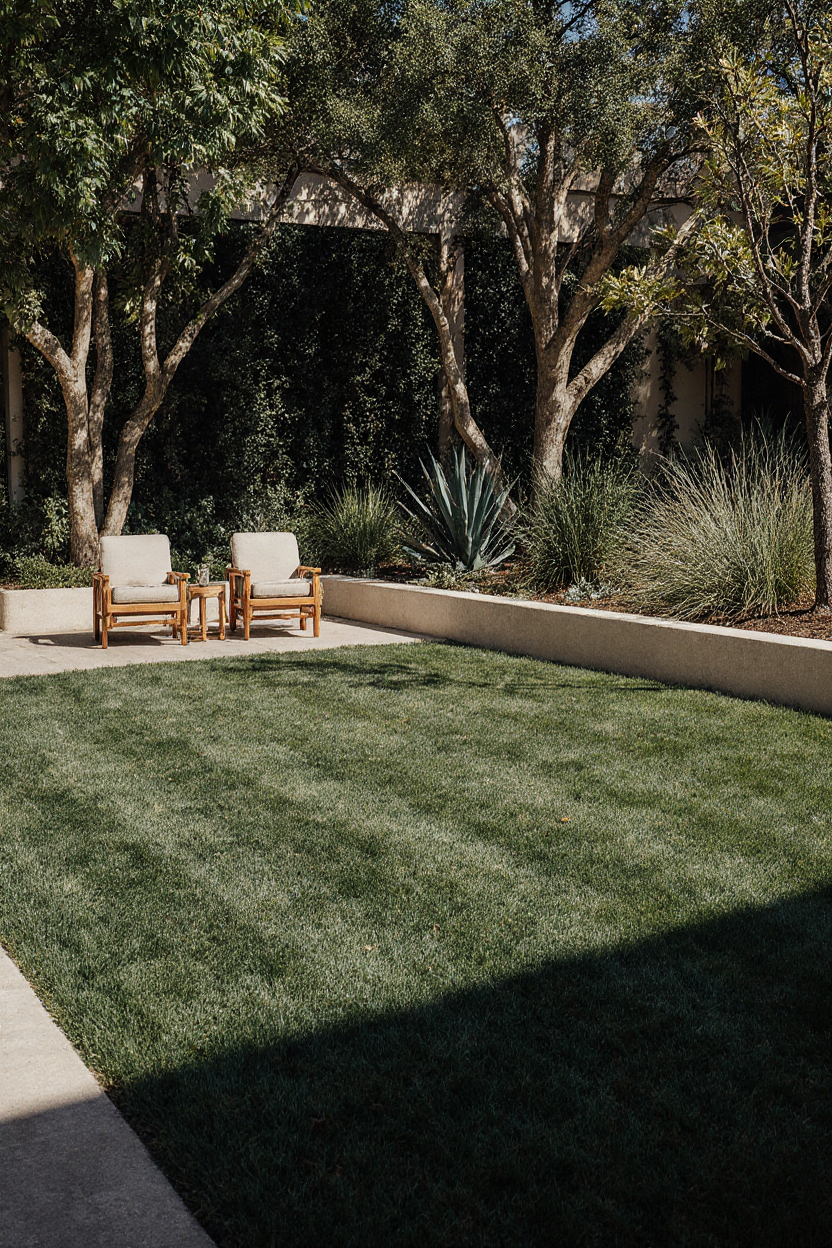
A low-maintenance garden plan designed for simple living. Durable, adaptable, and easy to care for.
A low-maintenance garden plan focuses on straightforward layouts and reliable planting that look good with minimal effort. Hardy natives and exotics, compact shrubs, and tough ground covers are selected for durability, low water use, and minimal pruning. Simple materials and clear structure keep the garden tidy and resilient over time, making it a practical choice for busy households, property owners, or anyone wanting an outdoor space that quietly works in the background.
What’s included in your Low Maintenance Plan
Bespoke Concept Layout — a clear, simple design structured for low maintenance and durability.
Planting Palette — a selection of hardy, drought-tolerant plants curated to suit your climate and the Low Maintenance theme.
Materials, Finishes & Lighting — recommended surfaces, fixtures, and lighting choices that support simple, long-lasting outdoor spaces.
Build Notes — guidance to help you understand installation steps, sequencing, and key considerations when bringing the plan to life.
Additional Moments (Optional) — any add-ons you choose will be integrated seamlessly into your bespoke concept plan.
After purchasing this Gramina Garden Plan, you’ll complete a short form with your site details. We’ll review everything to confirm the plan is a good fit for your property and climate. If anything doesn’t align, we’ll reach out to discuss options and ensure you get the right outcome for your garden.
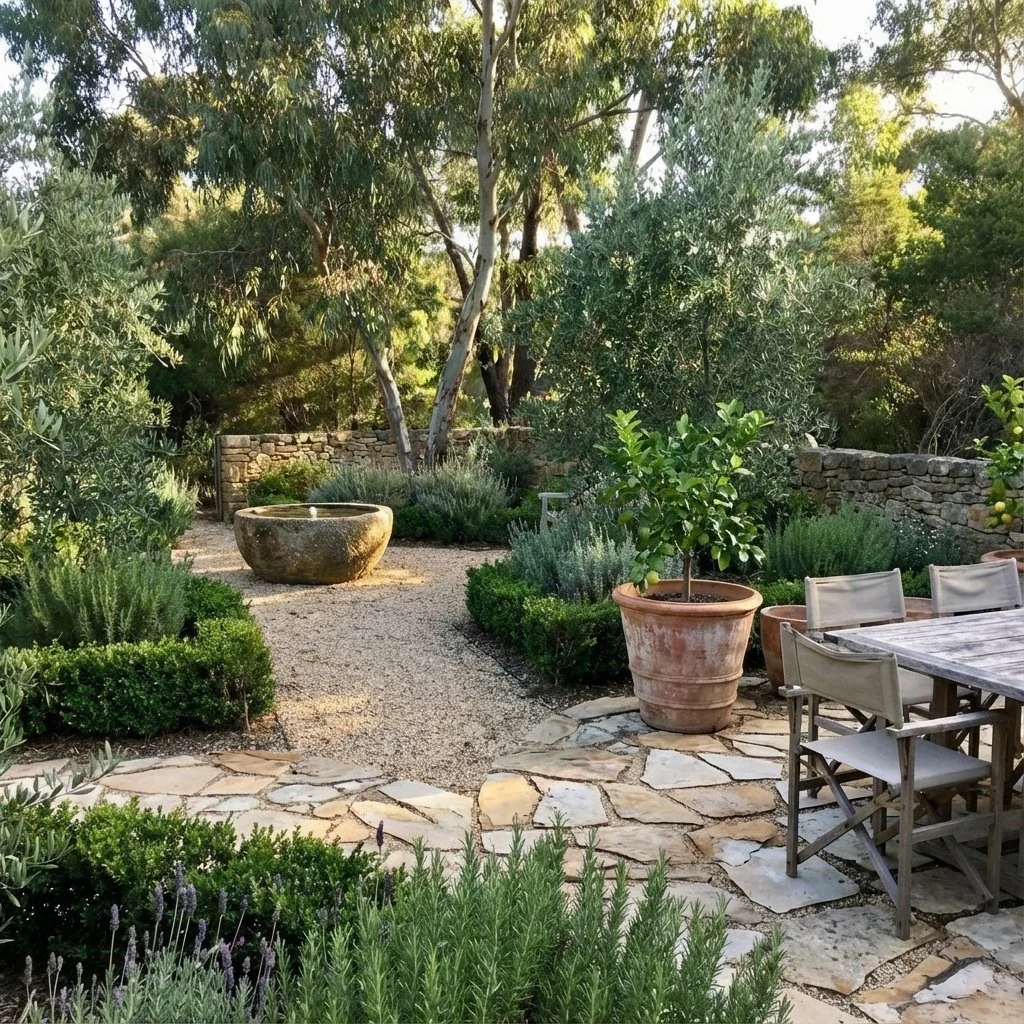
A relaxed, shaded garden inspired by Mediterranean living, shaped for Australian conditions.
A Mediterranean garden plan in an Australian context is about atmosphere, rhythm, and ease. It supports long afternoons outdoors, shared meals, and the simple pleasure of lingering outside. The design balances sun and relief, openness and enclosure, creating a garden that feels comfortable and usable across the seasons. Natural, honest materials give the space weight and timelessness, while resilient planting ensures the garden remains beautiful through heat and dry periods. The result is a warm, social setting grounded in everyday outdoor living.
What’s included in your Mediterranean Garden Plan
Bespoke Concept Layout — a clear, site-specific layout shaping relaxed outdoor spaces for everyday use.
Planting Palette — hardy, climate-suited plants selected for longevity, texture, and Mediterranean character.
Materials, Finishes & Lighting — natural surfaces and warm lighting that age well and feel timeless.
Build Notes — guidance to help you understand installation steps, sequencing, and key considerations when bringing the plan to life.
Additional Moments (Optional) — any add-ons you choose will be integrated seamlessly into your bespoke concept plan.
After purchasing this Gramina Garden Plan, you’ll complete a short form with your site details. We’ll review everything to confirm the plan is a good fit for your property and climate. If anything doesn’t align, we’ll reach out to discuss options and ensure you get the right outcome for your garden.