
What’s a Realistic Landscaping Budget in Australia?
“How much should I budget for my garden?” is one of the most common and most misunderstood questions homeowners ask. The difficulty is not that there is no answer. It is that landscaping budgets are driven by detail, complexity, and sequencing, not just size.
In Australia, gardens can be as affordable or as expensive as you make them. A small garden can cost more than a large one, and a simple garden can outperform a complex one. Understanding why is the key to setting a realistic budget.
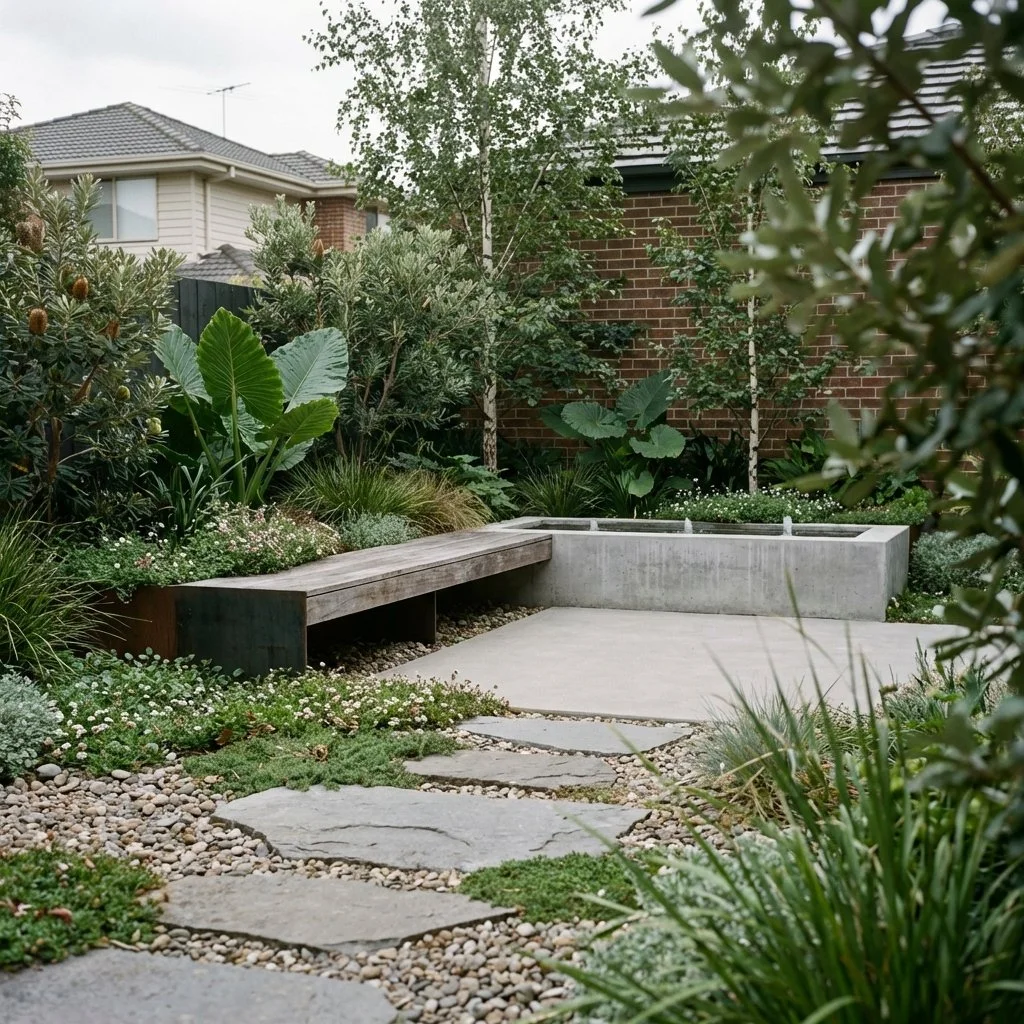
A well finished Australian native inspired courtyard design
Landscaping Is Not Just a Finishing Touch
One of the first assumptions to correct is that landscaping is cheap or easy compared to building a house. It is not.
Landscaping involves excavation, drainage, concrete, stone, timber, soil preparation, planting, and labour. In many cases, it functions like small-scale construction rather than decoration. The reason gardens feel expensive is because they are built environments, not accessories.
The upside is flexibility. Unlike buildings, gardens can be staged, simplified, or adjusted over time if they are planned properly.
Why Square Metre Rates Rarely Work
People often ask for a dollars-per-square-metre rate for landscaping. For whole projects, this is usually misleading.
A square metre of lawn and a square metre of swimming pool have completely different costs. The same applies to paving, decks, planting, or structures. Two gardens of identical size can end up with radically different budgets depending on what is actually built.
Rates can be useful at a smaller scale. Linear metre rates for fences, per-square-metre rates for paving, or unit rates for planting help clarify individual elements. But for an overall budget, square metre rates say very little about the real cost.
What Actually Drives Landscaping Costs
When you break real projects down, a few cost drivers consistently dominate.
Hardscape is usually the biggest expense. Concrete, paving, stone walls, steps, and retaining structures quickly consume budgets.
Structures such as decks, pergolas, gazebos, pools, and outdoor kitchens significantly increase costs, both in materials and labour.
Labour and access are major hidden factors. If materials need to be moved by hand, lifted over buildings, or transported to remote sites, costs rise rapidly.
Planting and lawn are almost always the most cost-effective elements. Good soil preparation, quality plants, and thoughtful planting design deliver the highest impact for the lowest spend.
If budget control matters, lean into soft landscape and be deliberate about hardscape and structures.
Budgeting for Landscaping When Building a New House
For people building a new home, landscaping is often left until the end. This is one of the most common and costly mistakes.
A realistic starting point is to allocate 10 to 30 percent of your total project budget to the garden. The exact figure depends on the size of the site and your aspirations, but this range reflects what works in practice.
When landscaping is underfunded, gardens are rushed, compromised, or never properly finished. When planned alongside the house, the result is usually calmer, more cohesive, and often more cost-effective overall.
Where to Spend First on a Limited Budget
If you want maximum impact from a limited budget, priorities matter.
The backbone of any successful garden is good soil, good plants, and good site preparation. If the plants thrive, the garden works. Cutting corners here almost always leads to higher costs later.
After that, prioritise one genuinely good outdoor space to sit. A single well-designed area with sun and shade will be used far more than multiple average spaces.
From there, additional elements can be added over time. Vegetable beds, frog ponds, outdoor showers, fire pits, and other features work best when they are layered onto a strong foundation rather than competing for budget upfront.
Planning Makes Landscaping Flexible
Unlike a house, a garden does not need to be finished all at once. But designing without direction is expensive.
A clear plan allows you to stage work logically, avoid redoing elements, and make budget decisions with confidence. It turns landscaping from a series of reactive choices into a controlled, adaptable process.
A Practical Way to Start in the Right Direction
For many homeowners, the hardest part is simply knowing where to begin. That is where having a clear, professional plan makes the biggest difference.
Our garden plans offer an accessible entry point into real landscape design thinking, created by experienced designers and priced from $99. They provide early direction, help avoid costly mistakes, and allow you to stage your garden over time with clarity and confidence. It is a practical foundation for smarter budgeting before construction begins.
A realistic landscaping budget is not about chasing a number. It is about understanding priorities, sequencing work intelligently, and making choices that build on each other.