
When a urban gardens feels overwhelming: how to design a calm green oasis
Practical design decisions that turn small city gardens into calm, livable retreats
Australia is an urban nation. A significant proportion of us live in cities, townhouses, apartments, and homes on blocks under 300 square metres. We love the convenience of city life, but most of us still carry a deep desire for connection to nature. Green space, calm, shade, and a sense of retreat are not luxuries. They are essential to how we want to live.
For many people, this means making the most of small but well-loved outdoor spaces. Courtyards, compact backyards, front gardens, and side yards have to work much harder than traditional suburban gardens. They sit closer to the house, are used more frequently, and are exposed to harsher conditions like reflected heat, wind tunnels, and overlooking neighbours.
Designing a successful small garden is not about squeezing in more features. It is about making better decisions from the start.
Below are a handful of design choices that consistently help small city gardens feel more expansive, calmer, greener, and better integrated with the home.

Layered planting softens hard boundaries
Dense, layered planting against dark boundaries creates depth and enclosure, helping small spaces feel calmer and more immersive rather than tight or exposed.
Choose materials that can handle real life
Small urban gardens experience far more wear than larger landscapes. There is less room to spread activity, so paths, surfaces, and edges are used constantly. This makes material choice one of the most important early decisions.
Toughness is key. Ground surfaces should assume daily use and occasional abuse. Bluestone pavers, well detailed concrete, and timber decking all perform well in urban settings when designed properly. Gravel can work beautifully in breakout areas or transitional spaces, but places where you relax, dine, and move furniture should be robust and stable.
Grass is rarely a good choice in small city gardens. In constrained spaces it wears quickly, becomes patchy, and often turns into a maintenance headache. At Gramina we are also cautious about artificial turf. It is not recyclable, contributes to heat buildup, and works against our broader sustainability goals. In most cases, well designed hardscape will outperform fake grass in both longevity and comfort.
The simple rule is this. In small gardens, keep your ground plane tough. It will reduce maintenance, improve usability, and create a calm foundation for everything else.

Ground surfaces do more than carry you through space
Carefully detailed paving with planted joints slows movement, softens the garden visually, and balances durability with a sense of calm underfoot.
Use planting and boundaries to create depth, not clutter
Planting is one of the most powerful tools in a small city sanctuary, but only when it is used deliberately.
One of the simplest and most effective moves is to control the backdrop. If your garden is enclosed by a standard timber fence, painting it a deep charcoal or black immediately absorbs glare and visual noise. It softens the eye, creates a sense of enclosure, and allows green foliage to stand out more vividly. This single decision can dramatically change the feel of a space.
Depth comes next. Layered planting creates the illusion of distance even in very small gardens. Taller screening plants at the back establish a visual horizon. Mid layer shrubs and feature plants sit in front, with lower planting closer to paths and edges. This arrangement draws the eye through the space rather than stopping it at the boundary.
Large leaved plants also play an important role. Used sparingly and placed with intent, they absorb light, reduce visual busyness, and introduce a sense of calm often associated with tropical or subtropical gardens. Even in cooler climates, a single well placed large leaved plant can soften a hard urban edge and make a garden feel more relaxed.
The goal is not more plants. It is better planting, arranged to create depth and composure.
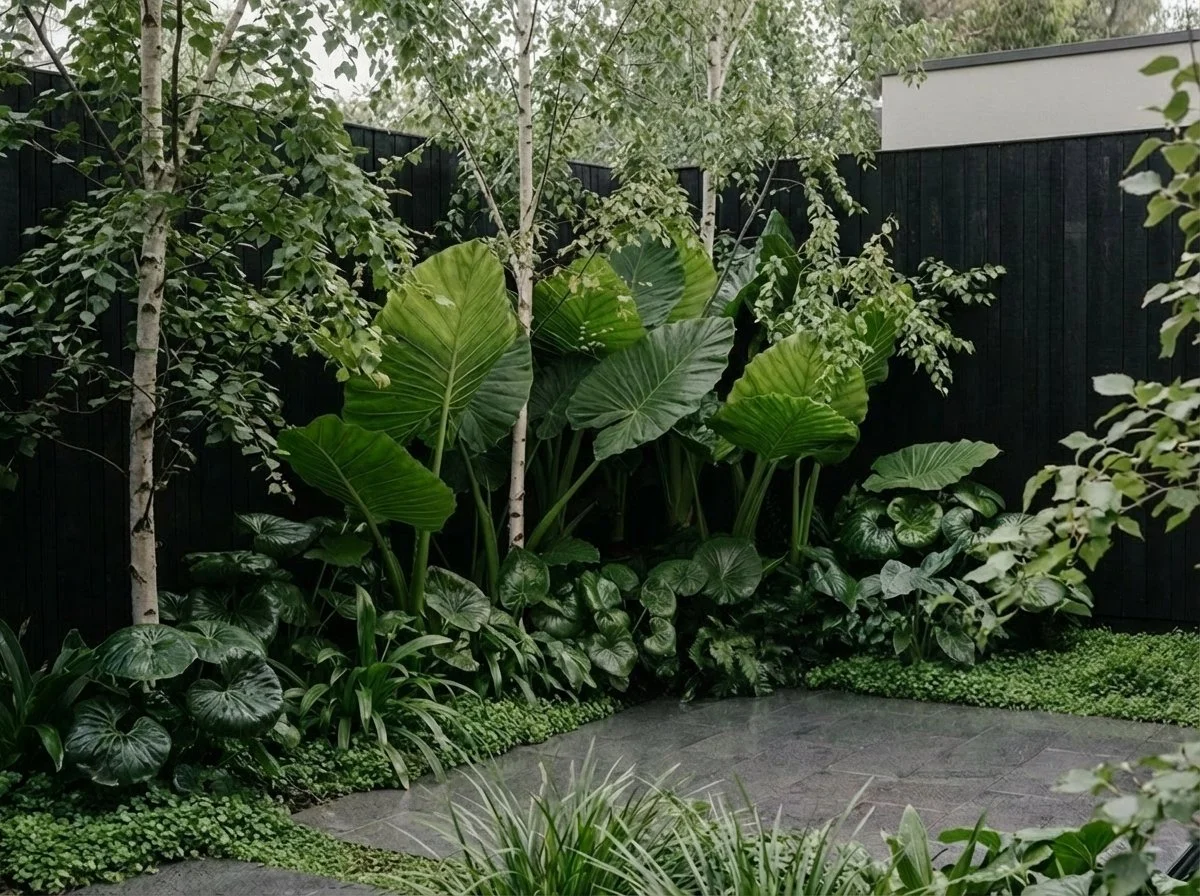
Depth is created by planting in layers, not by size
Tall screening plants, mid-layer foliage, and low groundcovers work together to make compact gardens feel deeper and more generous than they are.
Work harder: Make everything multi-use
In small gardens, single use elements are a luxury you rarely have. Space is too precious to waste.
Every design decision should be tested with a simple question. Can this do more than one job?
Seating can double as the edge of a garden bed or integrated storage. Low walls can be places to sit, lean, and display pots. Shade structures can provide relief from sun while also supporting climbing plants and softening built form. Lighting can be tucked under benches, steps, and edges rather than added as separate objects.
Laneways and side yards are often overlooked, but they can become valuable zones for movement, storage, and overflow during gatherings. Slimline sheds can store garden tools and double as storage for outdoor furniture or party equipment. Moveable tables and chairs allow a space to shift between quiet weekday use and larger weekend gatherings.
When every element earns its place, clutter disappears and flexibility increases.
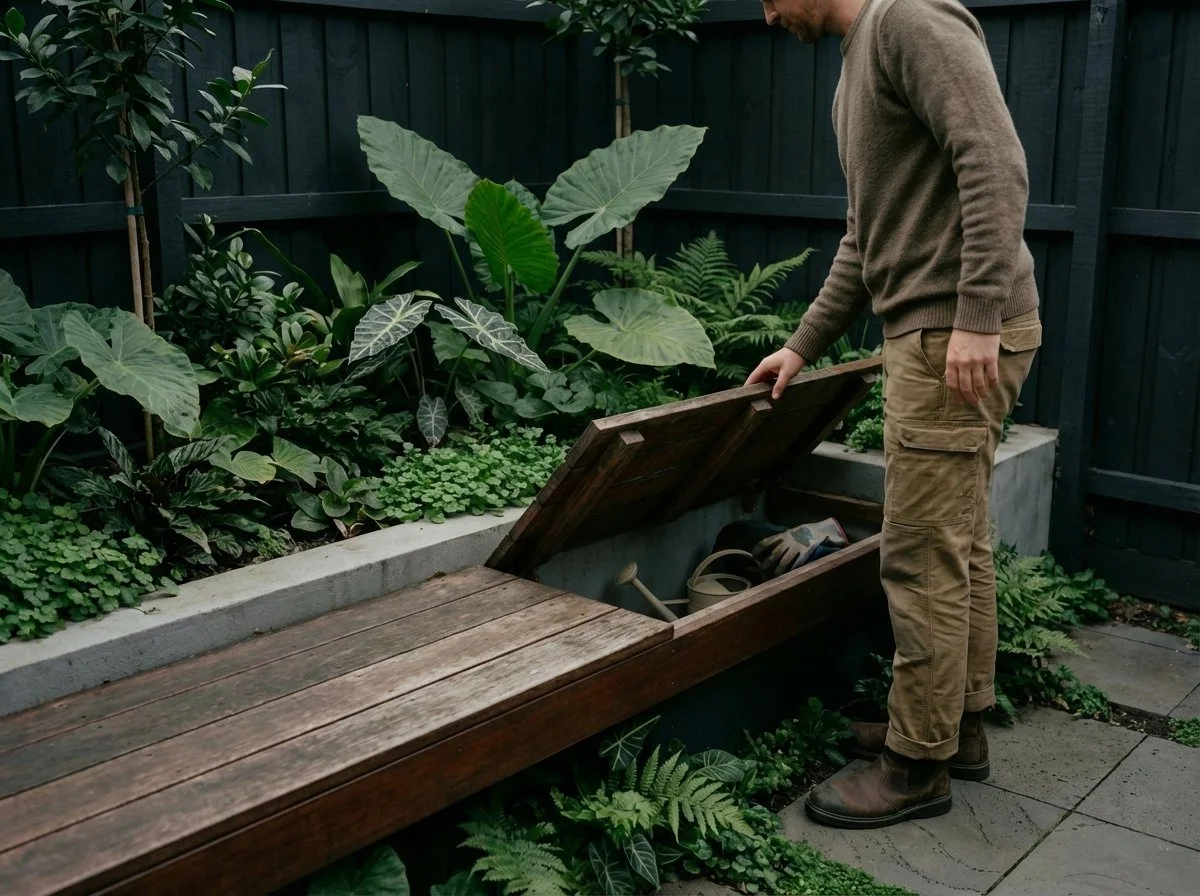
Design elements should earn their place
Built-in seating that doubles as hidden storage keeps small gardens flexible, uncluttered, and easy to use day to day.
The subtle yet powerful use of water
Water is one of the most transformative elements you can introduce into a small urban garden. Even in very compact spaces, the presence of moving water can change how a garden feels.
A small water feature does not need to dominate space to be effective. The sound of gently moving water introduces a layer of calm that masks traffic noise and neighbouring activity. It also has a cooling effect, as air moving across water lowers ambient temperature on hot days.
When designed without chemicals, water features can bring surprising biodiversity into the city. Birds, bees, and pollinators are drawn to water, increasing the sense that nature is present even in dense urban areas.
Concerns about mosquitoes are common but usually misplaced. Mosquitoes prefer still water. Ensuring constant movement through a small pump is enough to prevent issues in most cases.
Used thoughtfully, water becomes a quiet background element rather than a feature that demands attention.
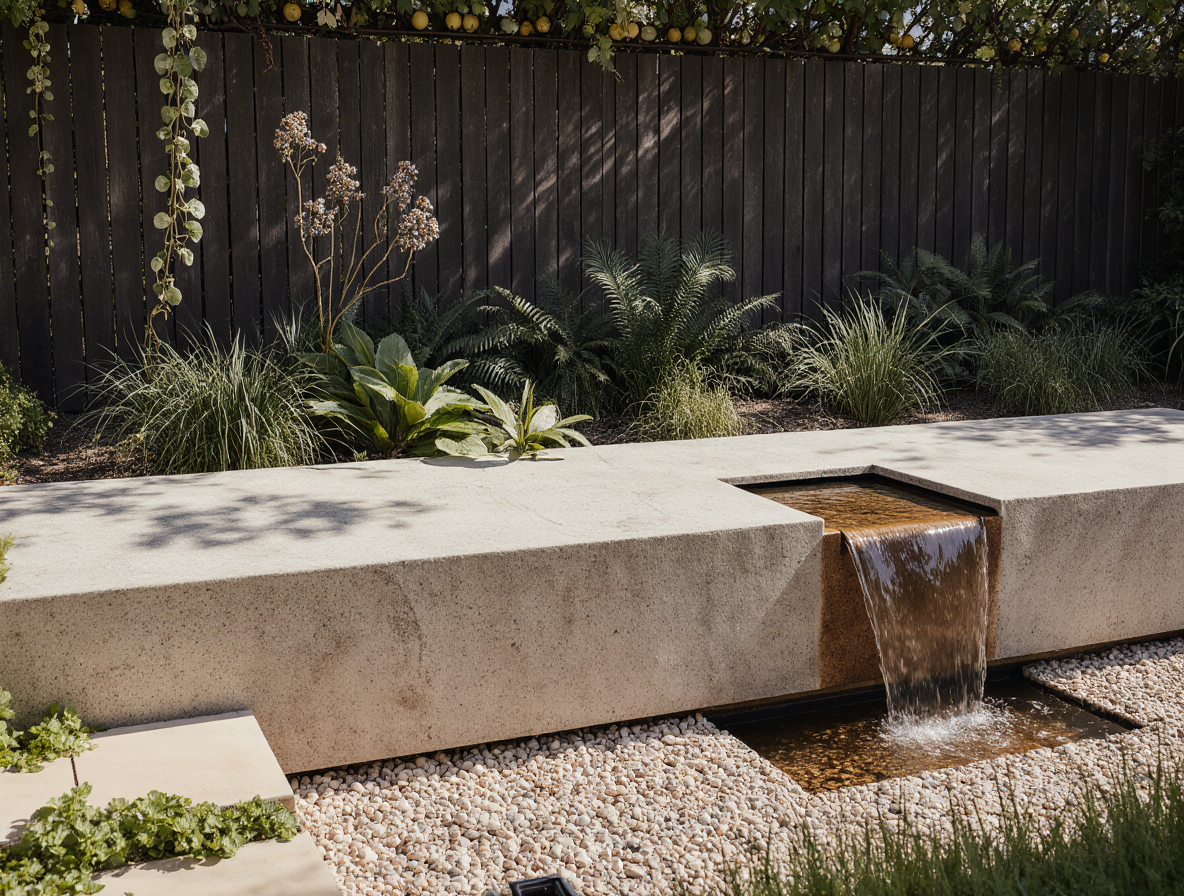
Water works best when it’s quiet
A subtle water element introduces movement, sound, and cooling without dominating the space, becoming part of the garden’s background rhythm.
Small city sanctuaries need to work harder than most gardens. Without clear planning, they quickly fill up, become cluttered, and lose their usefulness. The most successful small gardens are not those with the most ideas, but those shaped by intelligent decisions made early.
Structure before planting. Tough materials before decoration. Layered depth instead of surface clutter. Multi use elements over single purpose objects.
The Small City Sanctuary Garden Plan is designed to help you make these decisions upfront. It focuses on robust materials, climate appropriate planting, and layouts that create calm, depth, and flexibility in compact spaces.
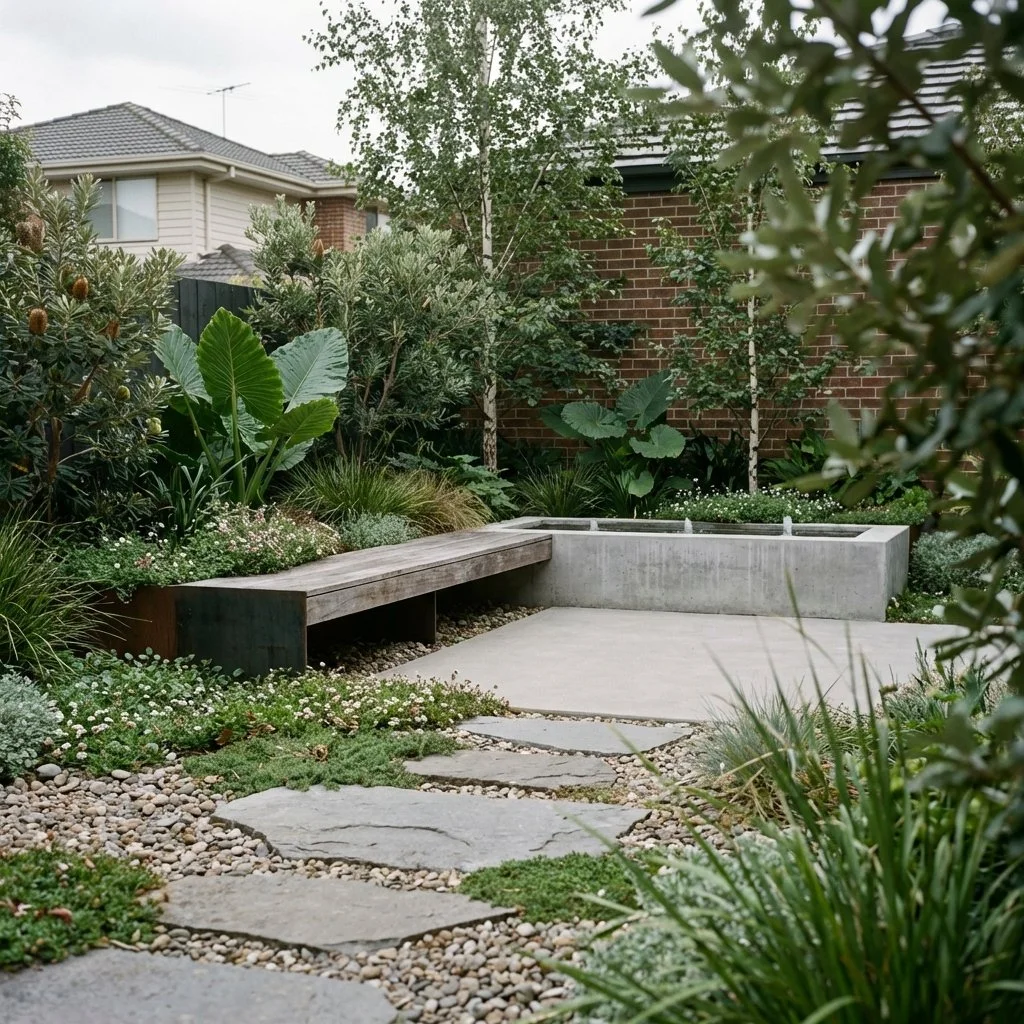
A lush, inward-looking garden plan designed for inner-city spaces. Calm, green, and quietly immersive.
Small City Sanctuary transforms small footprints into layered, green, and atmospheric outdoor rooms. It uses screening plants, structured forms, and soft understory planting to shape a sense of privacy and enclosure, making even tight urban courtyards feel peaceful and inviting. The framework is simple and adaptable, favouring species that thrive in sheltered, inner-city conditions and layouts that create depth, shade, and calm.
What’s included in your Small City Sanctuary Plan
Bespoke Concept Layout — a structure designed to maximise greenery, privacy, and atmosphere in compact spaces.
Planting Palette — layered, shade-tolerant and textural species curated to suit your climate and the Small City Sanctuary theme.
Materials, Finishes & Lighting — refined surfaces, elements and gentle lighting choices that build a calm, intimate mood.
Build Notes — guidance on layout sequencing, screening strategies, and installation considerations.
Additional Moments (Optional) — any add-ons you choose will be integrated seamlessly into your bespoke concept plan.
After purchasing this Gramina Garden Plan, you’ll complete a short form with your site details. We’ll review everything to confirm the plan is a good fit for your property and climate. If anything doesn’t align, we’ll reach out to discuss options and ensure you get the right outcome for your garden.