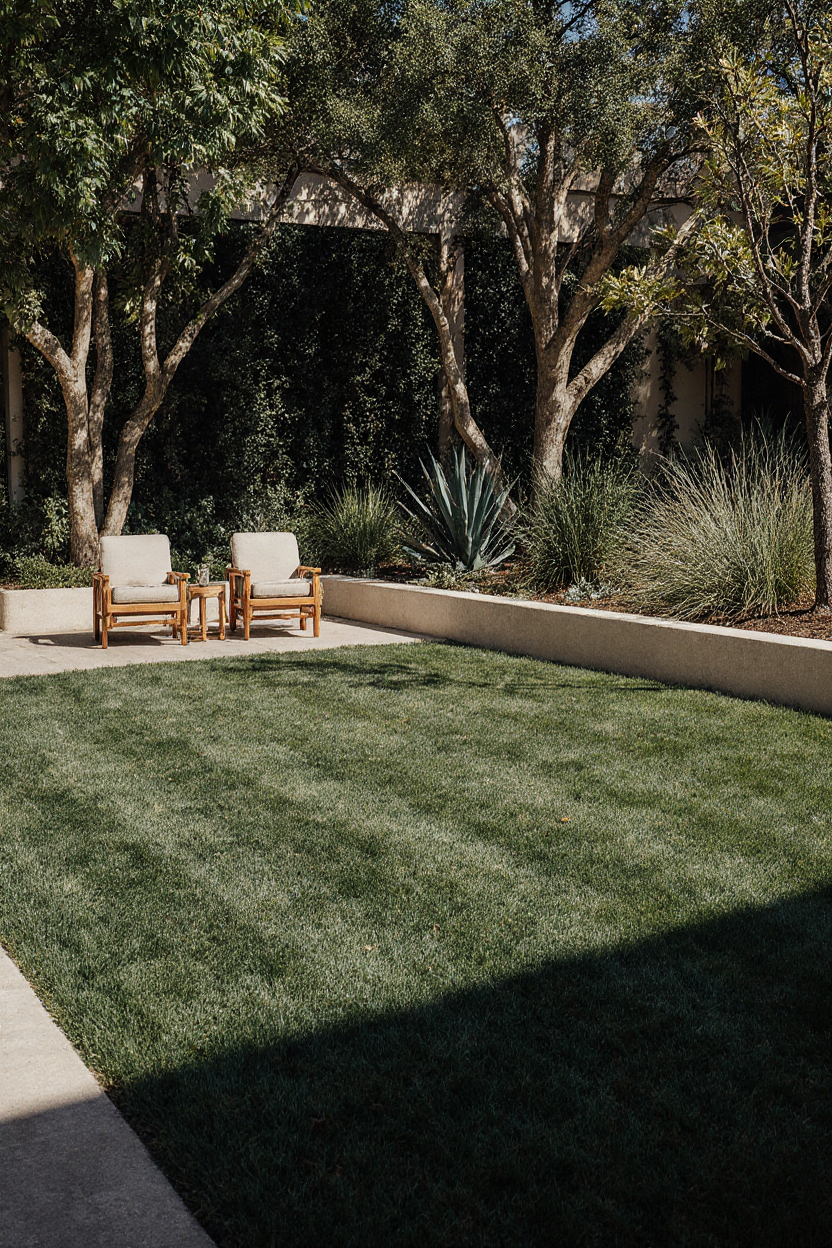
There Is No Such Thing as a No-Maintenance Garden
The idea of a no-maintenance garden is seductive. It promises freedom: no work, no worry, no guilt. But it’s also a myth, and one that often leads people toward disappointing gardens that either fall apart over time or feel lifeless from the start.
At Gramina, we’re uncomfortable with the term no-maintenance. Not because gardens should be hard work, but because all gardens and outdoor spaces require ongoing attention. Just like houses. Roofs need checking. Paint weathers. Moving parts wear. No one seriously expects a no-maintenance house. They expect a home that’s intelligently designed, robustly built, and easy to live with over time.
Gardens are no different.
The real question isn’t “How do I design a garden with no maintenance?”
It’s “How do I design a garden that is smart in its planning, planting, and material choices, so the ongoing input stays low, predictable, and manageable?”
That’s what low-maintenance garden design is actually about: good decisions made upfront that reduce effort later, without stripping away beauty, life, or pleasure.
Below are three of the most common concerns we hear from clients, and how intelligent garden design responds to them.
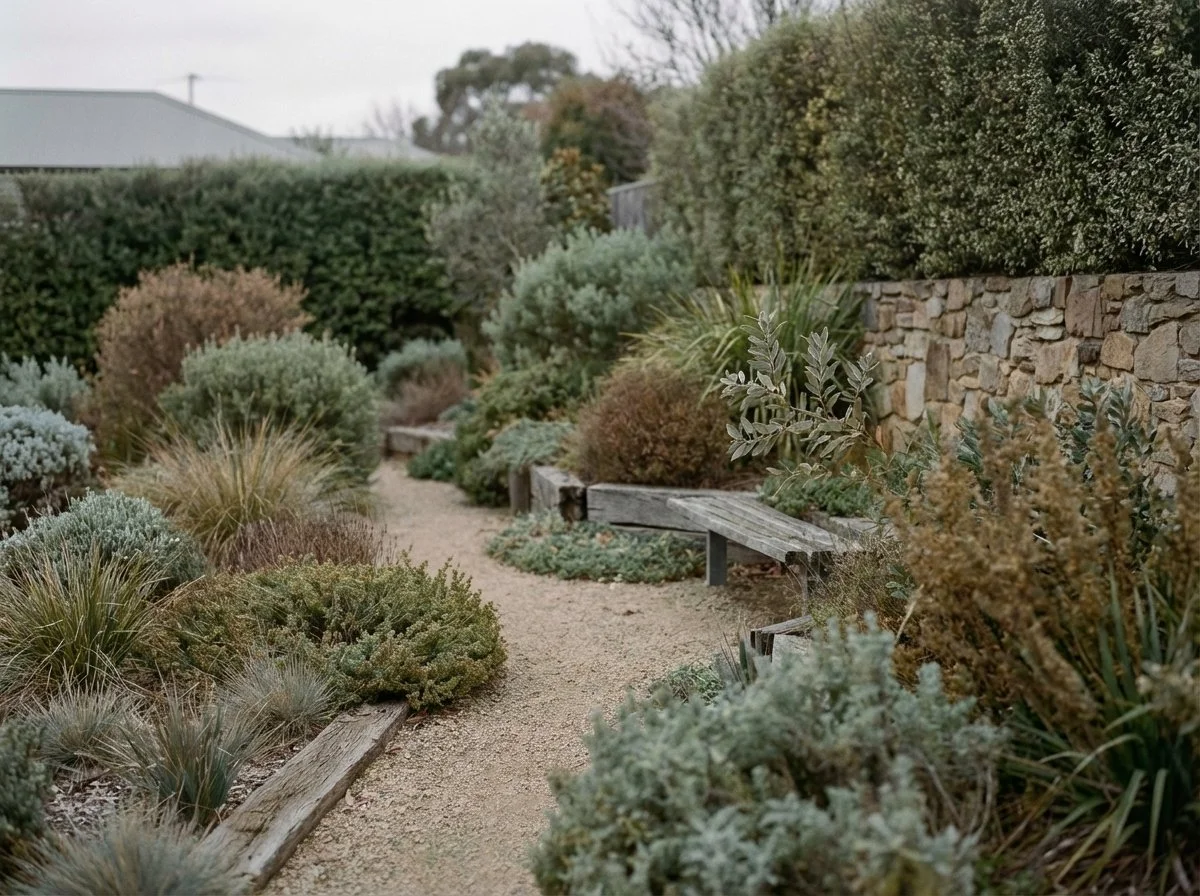
Resilient plant choices start with climate.
A layered mix of shrubs, groundcovers, and grasses selected to suit local conditions creates gardens that hold their form, colour, and structure year after year.
Client: “I don’t know anything about gardening. I’m scared I’ll kill plants.”
This is one of the most common starting points, and it’s completely reasonable. Gardening knowledge isn’t innate, and many people have had the experience of plants failing quickly or demanding far more care than expected.
The most important step in creating a low-maintenance garden is choosing plants that suit where you live.
Climate plays a defining role. Australia spans an enormous range of conditions, from heat and drought to frost and humidity. Plants that thrive in one region may struggle badly in another. A garden filled with climate-suited plants immediately becomes easier to care for, more resilient, and far more forgiving.
A good starting point is always local indigenous plants, because they have evolved to cope with regional climate, rainfall, and soils. From there, many plants from similar climates around the world also perform exceptionally well in Australia. Parts of Africa, the Mediterranean, and South America share comparable sun, heat, and seasonal patterns, and plants from these regions can be just as robust when selected carefully.
What matters most is choosing plants that are resilient, long-lived, and comfortable in your conditions. Plants that tolerate stress, recover well from neglect, and don’t rely on constant fertilising or pruning make a garden far easier to manage over time.
This is where design support becomes invaluable. The challenge is rarely a lack of good plants, but an overwhelming number of options. A design professional’s role is to narrow that down to a clear, manageable palette that suits your climate, your site, and your confidence level. With the right plants in place, maintenance becomes simpler and far less intimidating.
Materials also play a key role. Low-maintenance gardens rely on durable, forgiving materials such as concrete, steel, stone, and local gravels. These materials age well, don’t demand constant cleaning, and look better over time. Earthy tones and natural finishes are particularly effective, as they absorb wear and weather without showing every mark or stain.
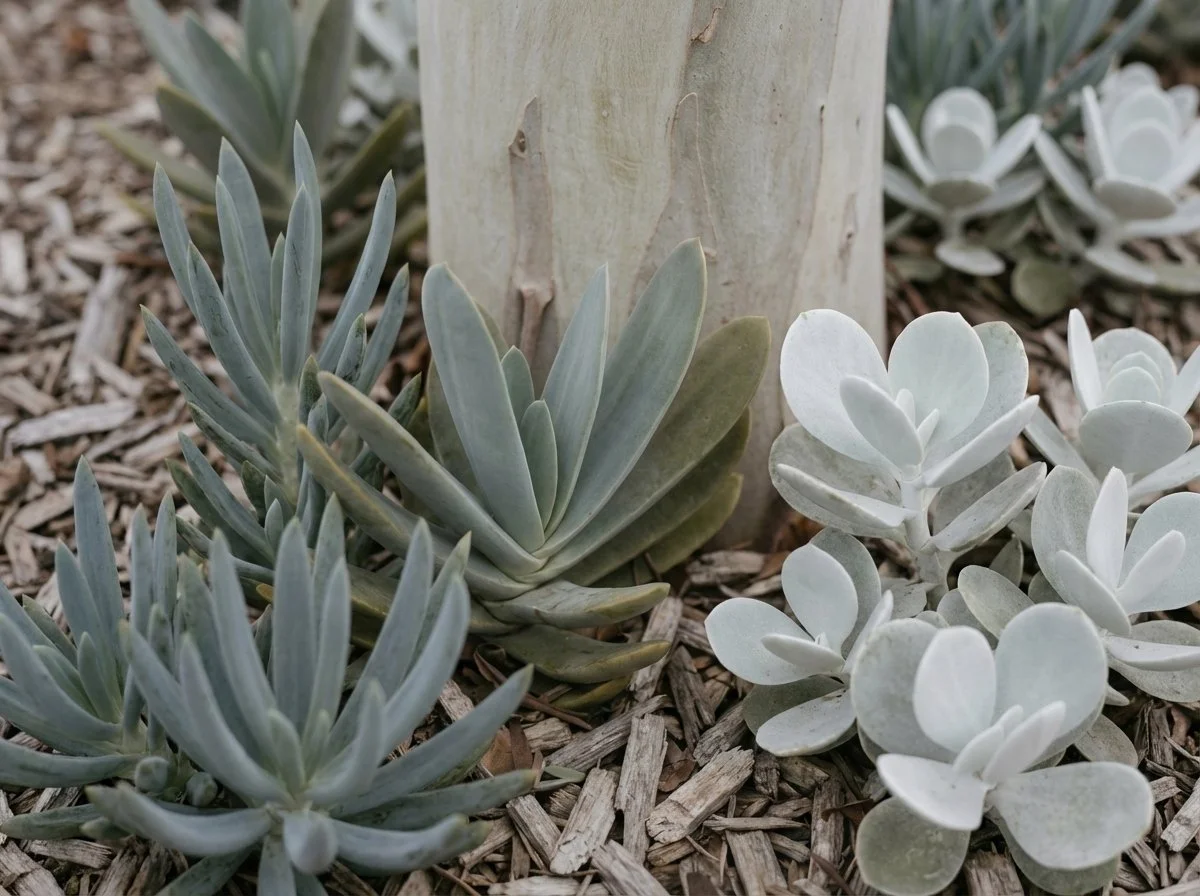
Tough plants, strong character.
Bold foliage and sculptural forms like candlesticks, cotyledon, and eucalypts bring durability, texture, and quiet confidence to gardens designed to endure.
Client: “I travel a lot. I’m away from my garden and can’t be there regularly.”
Many people want a garden that welcomes them home, not one that punishes them for being away.
Designing for absence is about creating systems that quietly do their job, even when no one is watching.
Plant selection again plays a major role. Choosing low water-use, drought-tolerant plants reduces stress during periods of absence. From there, automatic drip irrigation becomes essential. Drip systems deliver water slowly and directly to plant roots, reducing evaporation and keeping plants healthy with minimal input.
Good irrigation doesn’t just water plants while you’re away. It creates consistency. The garden continues to function while you sleep, work, or travel, removing urgency and anxiety from care.
Seasonal understanding is just as important. Most growth and maintenance happens during warmer months. Winter is typically quieter and requires very little input. Low-maintenance gardens focus attention at key moments throughout the year, such as a tidy-up before spring growth, lighter touch points during spring and summer, and another reset in autumn as growth slows and leaves fall. Winter becomes a genuine rest period.
There’s also nothing wrong with targeted professional help. Low-maintenance does not mean doing everything yourself. Timing is more important than regularity. Bringing in professional garden care at strategic moments, particularly early spring or autumn, can prevent months of accumulated work later. Small, well-timed interventions keep the garden on track.
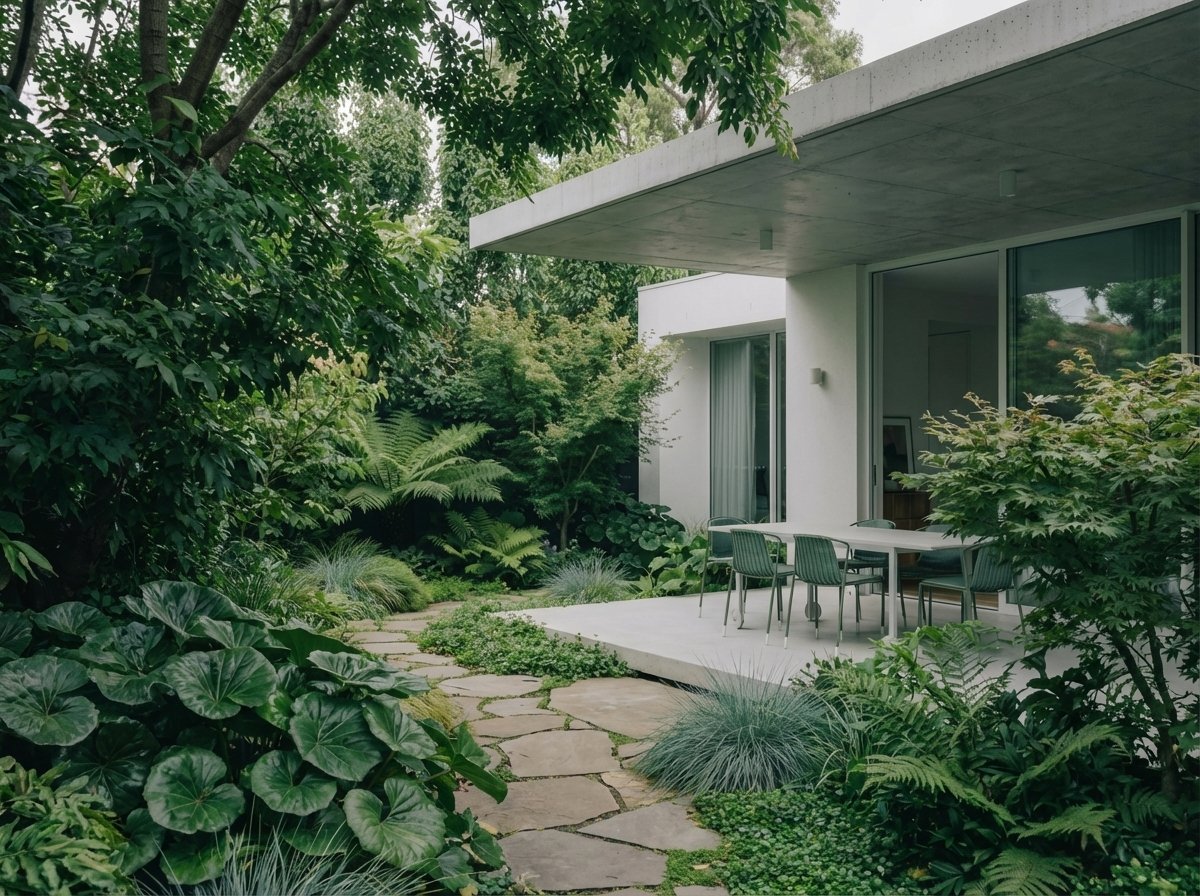
Lush gardens rely on consistency, not constant attention.
Well-planned irrigation supports healthy growth and green structure, keeping gardens thriving even when life pulls you away.
Client: “I’m older, less mobile, or gardening is physically difficult for me.”
This is where thoughtful design has the greatest long-term impact.
Gardens can and should be designed to age well with their owners. Reduced mobility does not mean a garden needs to become dull or overly simplified. It means decisions need to be made carefully from the beginning.
Access is critical. Paths, ramps, and gentle transitions should be integrated into the layout, making all areas of the garden easy to reach. Durable, stable materials such as concrete paths provide confidence for walking aids, sticks, or frames and reduce trip hazards.
For people who still want to garden, how beds are designed and accessed makes an enormous difference. Raised edges that double as seating allow people to perch while tending plants. Raised garden beds reduce bending and strain. These are small design moves that significantly extend how long gardening can remain part of everyday life.
Low-maintenance design here is about removing barriers, not removing engagement. A well-planned garden supports independence, comfort, and enjoyment well into older age.
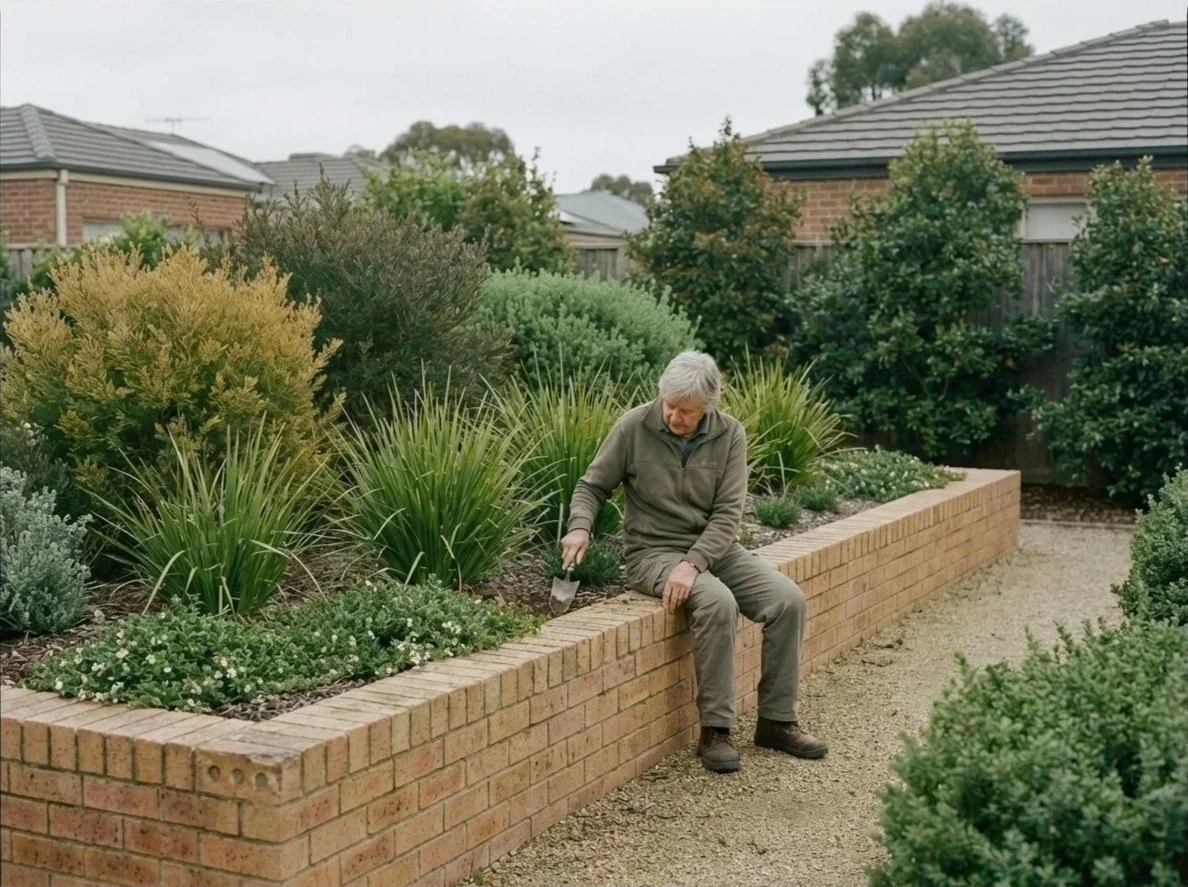
Designing for ease at every stage of life.
Raised beds, generous edges, and simple planting layouts make gardens comfortable to use, maintain, and enjoy over time.
Designing with Intelligence, Not Avoidance
The goal of a low-maintenance garden isn’t to eliminate care. It’s to eliminate unnecessary burden.
Well-designed gardens:
behave predictably
forgive periods of neglect
age gracefully
and reward small amounts of attention
They rely on clear planning, appropriate plants, durable materials, and realistic expectations. Over time, they become easier to live with rather than harder.
There may be no such thing as a no-maintenance garden, but there is such a thing as a garden that fits your life instead of fighting it.
That’s exactly what our Low Maintenance Garden plans are designed to do. If you’re looking for a clear, thoughtful starting point, you can explore our ready-made garden plans or follow along on Instagram, where we share practical ideas and real-world guidance on creating gardens that last.