
What is the most expensive part of landscaping and what is the cheapest?
When people think about landscaping costs, they often focus on plants or finishes. In reality, most of the cost of building a garden sits in construction, particularly anything that involves structure, ground movement, or difficult access.
For first time garden builders, understanding where money is actually spent makes it far easier to set a realistic budget and avoid overspending in the wrong places.
Below is a breakdown of typical landscaping elements from most expensive to least expensive, based on how residential garden projects are usually built.
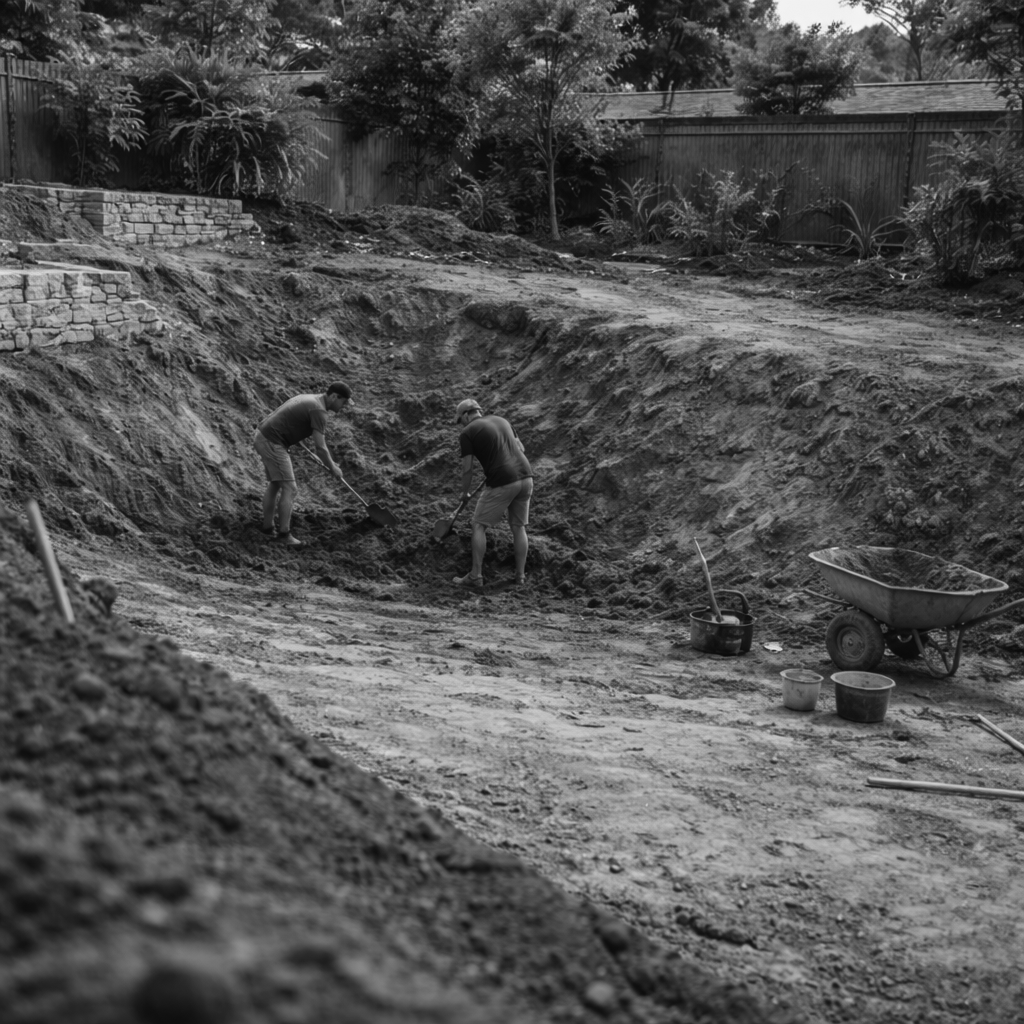
Two men digging during the construction of a new garden
1. Complex structures such as pools and shade structures
Elements that behave like small buildings are almost always the most expensive parts of a garden. Pools, pergolas, outdoor rooms, and large shade structures require engineering, precise construction, and multiple trades.
These elements involve high material and labour costs and often trigger approvals and inspections. Once steel, concrete, waterproofing, and services are involved, costs increase quickly.
Because of this, careful positioning and restraint at the design stage are critical.
2. Grading, earthworks, and drainage
Moving soil is expensive, especially on sloping sites or where material needs to be removed from the property. Cut and fill operations, retaining walls, and complex drainage systems can account for a large portion of a landscaping budget.
The cost is not only excavation, but also removal, disposal, compaction, and long term water management. Drainage mistakes are particularly costly to correct after construction.
Thoughtful design can often reduce these costs by working with existing levels rather than against them.
3. Hardscape, walls, and concrete work
Paving, retaining walls, steps, and concrete slabs add up quickly. These elements require formwork, materials, labour, and often engineering input.
Hardscape is durable and important, but it is also rigid. Once built, it is expensive to change. Using hard materials carefully and only where needed helps control costs without compromising functionality.
4. Access and site difficulty
Access is one of the most underestimated cost drivers in landscaping. Narrow side access, steep blocks, or sites with no vehicle access significantly increase labour costs.
When machinery cannot reach the site, materials must be moved by hand and construction becomes slower and more complex. Two similar gardens can have very different build costs purely due to access.
5. Garden beds, soil preparation, and planting
Planting is almost always cheaper than constructed elements and provides excellent value for money. Investment in good soil preparation and appropriate plant selection goes a long way.
Plants also improve over time as they establish and mature, while built elements remain fixed. This makes planting one of the most cost effective ways to improve a garden.
6. Grass and lawn areas
Grass is typically one of the cheapest elements to install, whether turf or seed. Even when prepared properly, lawn areas cost relatively little compared to built elements.
While maintenance costs can add up over time, lawn is rarely a major contributor to upfront landscaping costs.
7. Design and consultant fees
In the context of a full landscape build, design fees are usually a small portion of the overall budget. However, they influence every expensive decision listed above.
Good design helps reduce unnecessary construction, simplify earthworks, improve access strategies, and avoid costly mistakes. The role of design is to control cost, not add to it.
8. Council permits and approvals
Council permits are often unavoidable, but the fees themselves are usually modest compared to construction costs. They rarely drive a landscaping budget on their own.
The larger cost is the documentation required to obtain approvals correctly, which again highlights the value of clear design.
A simple takeaway
The most expensive parts of landscaping are the elements that are hardest to change later. Structure, levels, drainage, and access decisions lock in cost early.
Design is the least expensive part of the project that influences all of them.
A practical place to start
If you are early in the process and unsure how much design input you need, Gramina Garden Plans offer a simple starting point.
They show you how a professional garden plan is structured and how design decisions affect construction, without committing to a full bespoke service.
Gramina Garden Plans start at $99.
Find more Garden Construction posts here
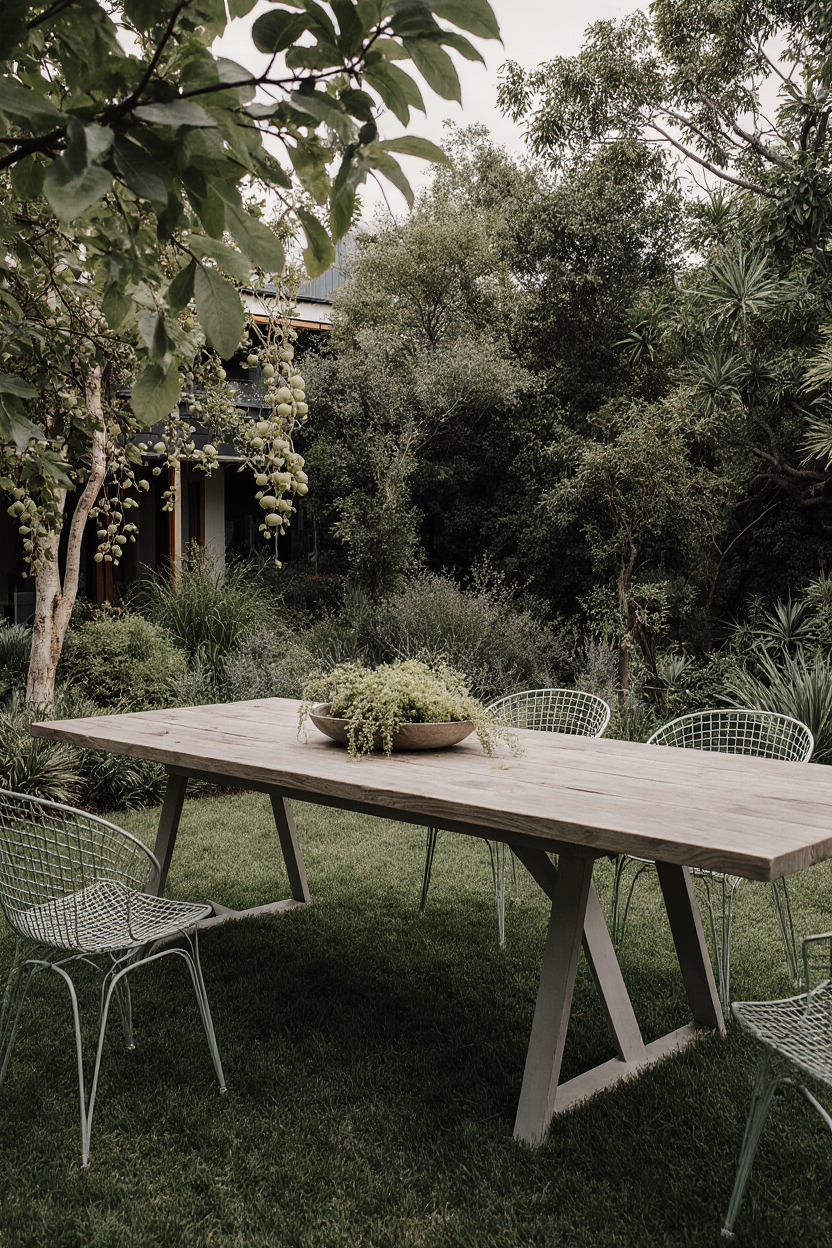
A simple, grounded garden plan inspired by the Australian bush — relaxed, resilient, and deeply connected to place.
Grounded Bush Garden captures the feel of the Aussie bush: informal paths, natural groupings of native shrubs, soft groundcovers, and a palette that feels unmistakably Australian. This plan embraces the textures, tones, and structure of our native landscapes, using hardy species that thrive with minimal care while supporting local wildlife. The layout is intentionally simple and low-intervention, creating a calm, open garden that feels natural rather than overly designed.
What’s included in your Grounded Bush Garden Plan
Bespoke Concept Layout — a relaxed, bush-inspired structure with natural flow and soft transitions.
Planting Palette — hardy natives selected for resilience, local ecology, and gentle bushland character.
Materials, Finishes & Lighting — grounded, natural materials and subtle lighting that complement native landscapes.
Build Notes — guidance for informal pathways, planting groupings, spacing, and long-term native care.
Additional Moments (Optional) — seamlessly integrated based on the Easy Native Living aesthetic.
After purchasing this Gramina Garden Plan, you’ll complete a short form with your site details. We’ll review everything to confirm the plan is a good fit for your property and climate. If anything doesn’t align, we’ll reach out to discuss options and ensure you get the right outcome for your garden.
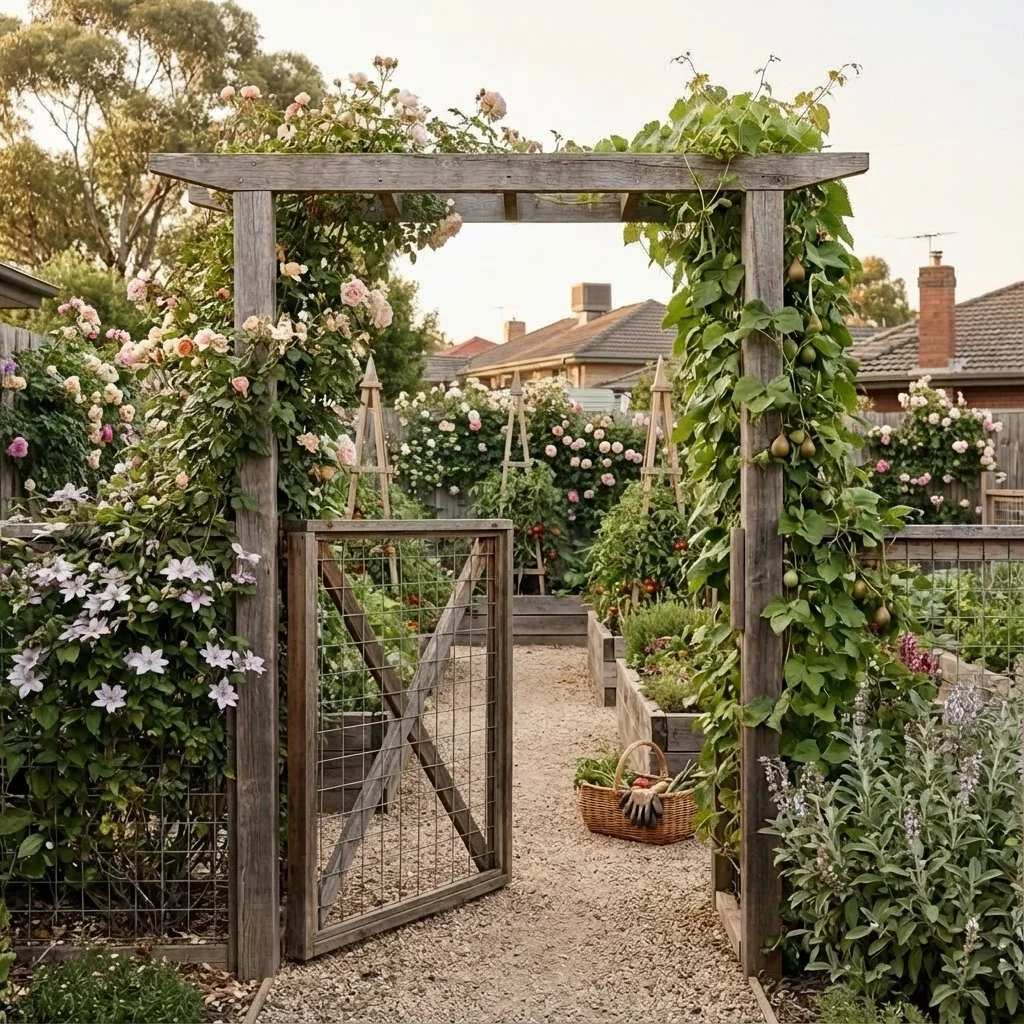
A garden shaped by seasons, habits, and the quiet satisfaction of growing food.
Productive Patch is about settling into a slower, more attentive rhythm — noticing the seasons change, harvesting what’s ready, and building small rituals around growing and eating. It’s the pleasure of stepping outside to check what’s thriving, picking herbs moments before cooking, and gradually becoming someone who lives with the garden rather than managing it. Beneath that feeling sits a clear, considered layout that shows how to arrange a veggie garden for success, working with sun, shade, edges, and access. Beds are positioned to support seasonal crops, perennials, and longer-term producers together, creating strong practical foundations. The result is a garden that feels generous and achievable, where productivity supports everyday life rather than competing with it.ple, resilient layout and styling creates a tidy, appealing outdoor space that suits both long-term rentals and low-impact improvements.
What’s included in your Veggie Garden Plan
Bespoke Concept Layout — A garden layout for your site designed to optimise sunlight, access, and bed arrangement for productive food growing.
Planting Palette — A curated mix of seasonal crops, perennial edibles, and longer-term productive plants suited to your climate and growing conditions.
Materials, Finishes & Lighting — Practical, durable recommendations for beds, paths, edges, and working surfaces that support everyday use and seasonal change.
Build Notes — guidance to help you understand installation steps, sequencing, and key considerations when bringing the plan to life.
Additional Moments (Optional) — any add-ons you choose will be integrated seamlessly into your bespoke concept plan.
After purchasing this Gramina Garden Plan, you’ll complete a short form with your site details. We’ll review everything to confirm the plan is a good fit for your property and climate. If anything doesn’t align, we’ll reach out to discuss options and ensure you get the right outcome for your garden.
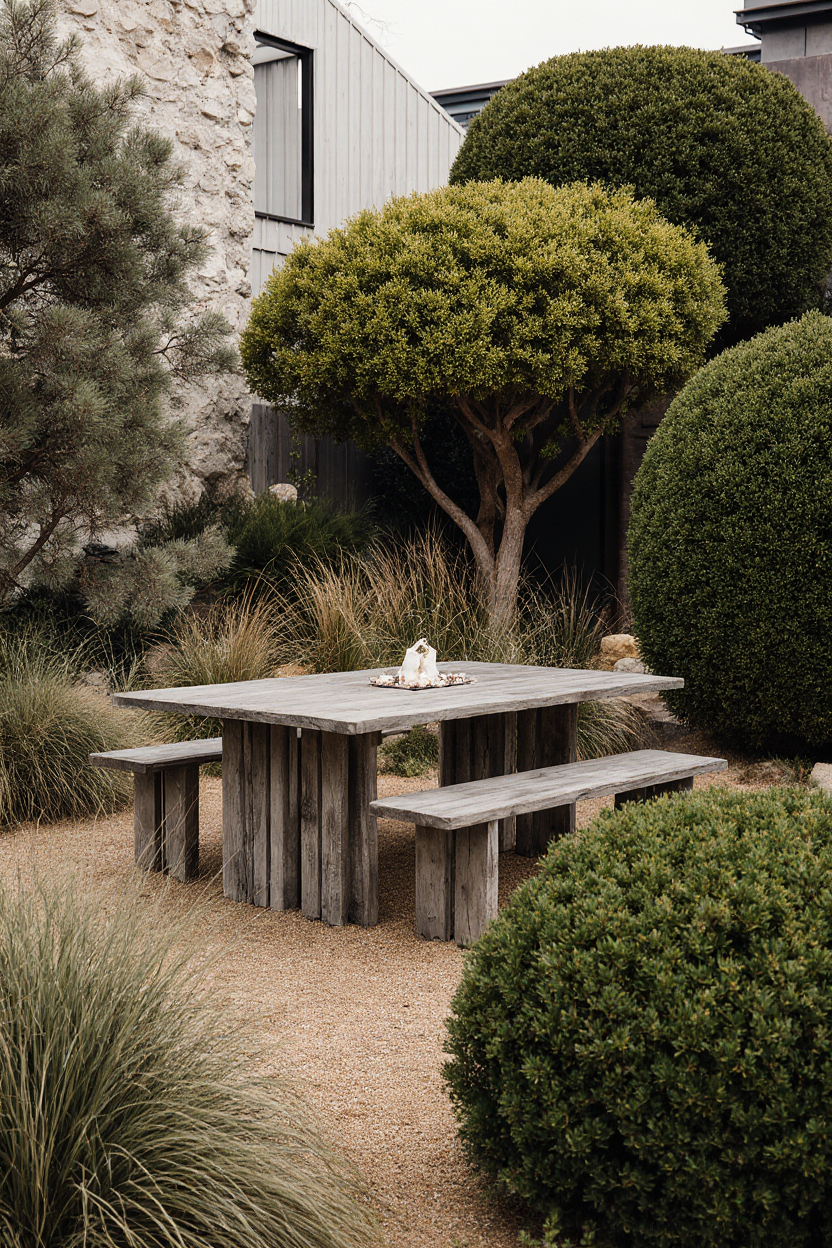
A sheltered coastal garden designed for calm, comfort, and everyday outdoor living in and around the beach.
Sheltered Coastal Retreat captures the relaxed rhythm of the coast while shaping outdoor spaces that feel protected and usable in tough coastal conditions. The design creates calm, sheltered areas that soften wind, sun, and salt, allowing the garden to be a place for unwinding, gathering, and slow outdoor living. Planting and materials are chosen for durability and resilience, weathering naturally over time while maintaining a clear, relaxed coastal character.
What’s included in your Costal Garden Plan
Bespoke Concept Layout — a site-specific layout that creates protected outdoor spaces with a coastal garden atmosphere
Planting Palette — a selection of hardy, drought-tolerant plants curated to suit your climate and the Costal Garden theme.
Materials, Finishes & Lighting — recommended surfaces, fixtures, and lighting choices that support simple, long-lasting outdoor spaces.
Build Notes — guidance to help you understand installation steps, sequencing, and key considerations when bringing the plan to life.
Additional Moments (Optional) — any add-ons you choose will be integrated seamlessly into your bespoke concept plan.
After purchasing this Gramina Garden Plan, you’ll complete a short form with your site details. We’ll review everything to confirm the plan is a good fit for your property and climate. If anything doesn’t align, we’ll reach out to discuss options and ensure you get the right outcome for your garden.